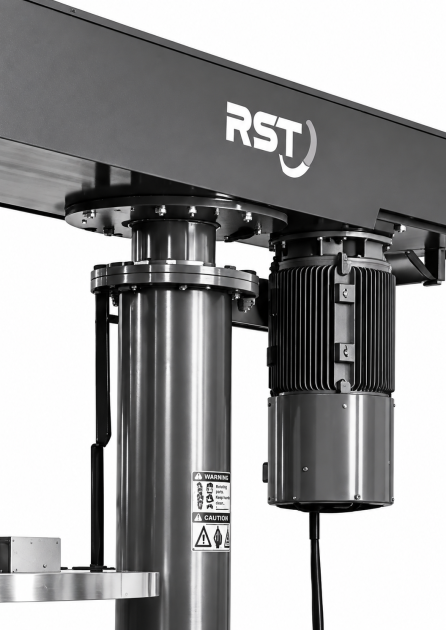
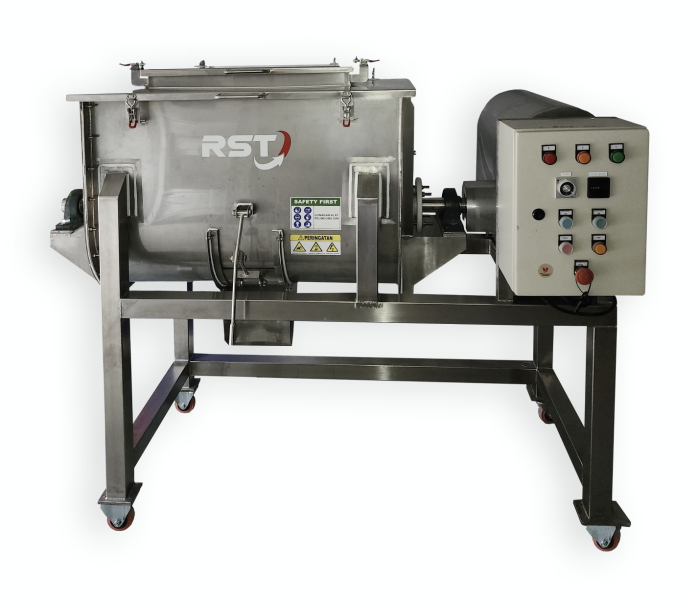
How to Start a Powder Drink Business and Choose the Right Ribbon Mixer
Learn how to start a powder drink business, develop production processes, and choose the right Ribbon Mixer for powder blending with RST.
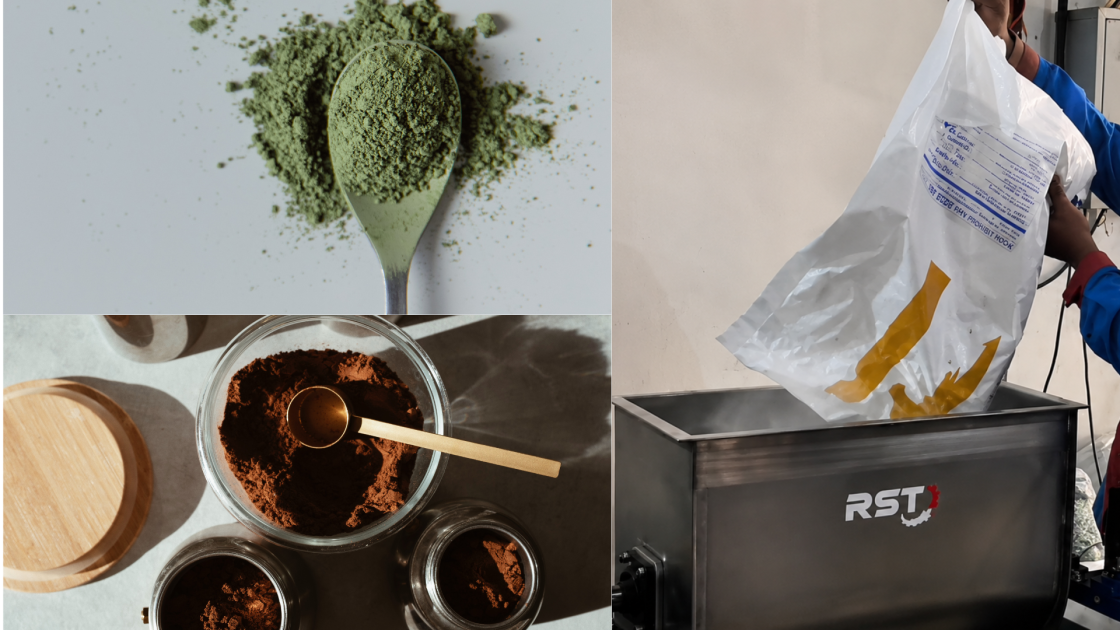
The growing popularity of trending beverages in Indonesia, such as matcha, milk tea, coffee, and fruit-based drinks, is creating opportunities for entrepreneurs to start and develop powder drink businesses.
Powder drinks are beverages in powder form that are dissolved in water or another liquid before consumption. These products may contain base ingredients, sweeteners, flavorings, colorants, and other ingredients, depending on the formulation.
Powder drink products can be developed for retail sales, supply to cafés and restaurants, or B2B applications in the food and beverage industry.
Starting a powder drink business does not necessarily require a large-scale production facility from the beginning. Entrepreneurs can start by selecting a product, developing a formulation, conducting product testing, and understanding customer demand. As demand increases, production consistency, process efficiency, and equipment requirements become important considerations.
One piece of equipment to explore during production planning is a Ribbon Mixer, an industrial mixing machine designed for blending powder and dry materials. Its suitability depends on the characteristics of the materials and the requirements of the production process.
So, how can you start a powder drink business from scratch, and when should you consider investing in a Ribbon Mixer?
Let's explore the key steps.
1. Powder Drink Business Opportunities
Powder drinks are used in a wide range of applications, from household consumption to premix products supplied to cafés, restaurants, and distributors.
Examples of powder drink products include:
Chocolate, matcha, and strawberry drink powders.
Coffee and milk beverage premixes.
Fruit-flavored drink powders.
Powder drink products for cafés and beverage shops.
Custom dry beverage premix formulations.
Each product has different material characteristics and production requirements. Particle size, bulk density, moisture content, and formulation composition can affect the mixing process and material handling requirements.
Therefore, developing a powder drink business should begin with an understanding of the product and its production process, rather than focusing only on the machine's capacity.
2. How to Start a Powder Drink Business
Before investing in production equipment, define your product concept and business requirements.
The following factors should be considered:
Product type: What kind of powder drink do you want to produce?
Formulation and raw materials: What ingredients will be used?
Target market: Will you sell to retail customers, cafés, restaurants, distributors, or industrial buyers?
Batch capacity: How many kilograms do you plan to produce per batch?
Filling and packaging: How will the finished product be packed and handled?
Quality and food safety requirements: What standards and applicable regulations must the product meet?
For example, a formulation containing sugar, milk powder, cocoa, and flavoring ingredients may have different mixing characteristics from another formulation. Differences in bulk density and particle size should be evaluated when determining the appropriate mixing approach.
The right mixing machine should be selected based on material characteristics and production requirements, not simply the desired batch weight.
3. Why Is Mixing Homogeneity Important in Powder Drink Production?
In powder blending, the objective is to produce a mixture that meets the defined homogeneity and quality specifications.
Several factors should be evaluated:
Particle size and particle size distribution.
Bulk density of the ingredients.
Ingredient addition sequence.
Mixing time.
Risk of segregation during material transfer and discharge.
Adequate mixing does not always guarantee that a mixture will remain uniform after the mixing process. Differences in particle characteristics and material handling can cause segregation in certain formulations.
For this reason, the mixing process should be evaluated using the actual ingredients and formulation, including appropriate testing of the finished mixture.
Key Considerations for Powder Blending
A suitable mixing process should be developed based on the specific material properties, product requirements, and production conditions. Mixing time and operating parameters should be established through testing rather than relying solely on general assumptions.
4. What Is a Ribbon Mixer?
A Ribbon Mixer is an industrial mixing machine that uses ribbon-shaped agitators to blend materials, commonly in powder mixing and dry blending applications.

Ribbon Mixers can be considered for a range of dry material mixing processes, depending on material characteristics, batch capacity, and process requirements.
For powder drink applications, the equipment design should be evaluated based on the following factors:
Material type and flow characteristics.
Batch capacity and working volume.
Required mixing uniformity.
Filling and discharge systems.
Product-contact material requirements.
Dust control and workplace safety.
Not every powder drink formulation requires the same mixer configuration. Testing and technical evaluation are important for determining whether a particular Ribbon Mixer design is suitable for the intended application.
5. How to Choose a Ribbon Mixer for Powder Drinks
Selecting a Ribbon Mixer should begin with process data and material characteristics.
The following information can help guide the equipment evaluation.
1. Material Type and Characteristics
Identify the ingredients to be mixed, such as sugar, milk powder, cocoa, coffee, and other additives.
Each material should be evaluated based on its relevant characteristics, including particle size, bulk density, flowability, and moisture sensitivity where applicable.
2. Target Batch Capacity
Define the required batch weight and production demand.
Consider both the weight of each batch and the planned daily or monthly production volume.
3. Bulk Density
Bulk density helps the engineering team estimate material volume and evaluate the required working volume of the mixer.
The relationship between material weight, bulk density, and mixer volume should be considered when selecting the equipment size.
4. Product-Contact Materials
Determine the material requirements for surfaces that come into contact with the product.
Material selection should be based on the product, applicable process requirements, cleaning considerations, and relevant food safety requirements.
5. Target Mixing Time
Mixing time should be evaluated through testing using the actual formulation and operating conditions.
The target should be based on the required mixing quality and production objectives.
6. Discharge System and Dust Control
Consider how the blended product will be discharged and transferred to the next production stage.
Dust control requirements should be assessed based on the material properties, process layout, and applicable workplace safety requirements.
8. Consult PT Rho Sigma Trijaya for Custom Ribbon Mixer Solutions
PT Rho Sigma Trijaya (RST) provides custom industrial mixing equipment solutions for a variety of industrial applications.
When developing a Ribbon Mixer, the engineering team can evaluate equipment requirements based on process data, material characteristics, and application-specific specifications.
The initial technical discussion may include:
Material type and characteristics.
Target batch weight.
Material bulk density.
Product-contact material requirements.
Target mixing time.
Filling and discharge systems.
Dust control requirements.
Equipment construction and process specifications.
A data-driven engineering approach helps guide the development of equipment specifications that are aligned with the intended application.
Why Discuss Your Mixing Requirements with an Engineering Team?
Selecting industrial mixing equipment involves more than comparing machine capacity and price. A suitable design should consider the actual process, material properties, production targets, and operational requirements.
By preparing relevant process data, businesses can have a more focused discussion about the mixing equipment they need.
Conclusion: Start with Your Product, Develop Your Process, and Choose the Right Equipment
Starting a powder drink business involves more than creating an appealing formulation. Product development should also consider quality consistency, production capacity, process efficiency, and applicable food safety requirements.
A Ribbon Mixer is one type of equipment that may be considered for powder blending applications. Its selection should be based on material characteristics, production requirements, and process evaluation.
Start with your product and process data, then discuss your equipment requirements with an experienced industrial mixing engineering team.
Want to Develop Your Powder Drink Production?
Discuss your Ribbon Mixer requirements and industrial mixing solutions with the team at PT Rho Sigma Trijaya.
PT Rho Sigma Trijaya
Industrial Mixing Solutions
Website: https://www.rhosigmatrijaya.co.id/
Email: sales1@rhosigmatrijaya.co.id
Let's discuss your process requirements and find the right mixing solution for your business.
Frequently Asked Questions (FAQ)
What is a Ribbon Mixer?
A Ribbon Mixer is a horizontal industrial mixing machine that uses ribbon-shaped agitators to blend dry materials, including powders and dry premixes. Its suitability depends on the material properties, formulation, and process requirements.
When does a powder drink business need a Ribbon Mixer?
A Ribbon Mixer may be considered when production volume increases, manual mixing capacity becomes insufficient, process consistency needs improvement, or the business is planning to expand its production capacity.
Why is mixing homogeneity important in powder drink production?
Mixing homogeneity is important because differences in particle size and bulk density among ingredients, such as sugar, milk powder, and flavoring materials, can affect mixture uniformity. Improper mixing or subsequent material handling may also increase the risk of segregation.
What information is needed before consulting RST about a Ribbon Mixer?
Useful information includes:
- Material type and characteristics
- Product-contact material requirements
- Filling and discharge systems
- Target mixing time
- Target batch weight
- Dust control requirements
- Applicable process and construction specifications
Material bulk density
This information helps the engineering team evaluate the mixing equipment requirements more effectively.