Guide to Choosing a High Speed Mixer for Pigment & Chemical Dispersion
Learn how to choose the right high speed mixer for pigment and chemical dispersion based on viscosity, batch size, shear, cooling, and material requirements.
If your product involves the dispersion of pigments, resins, or other liquid chemicals, the quality of the final product is largely determined by one piece of equipment: the high speed mixer. Choosing the wrong mixer can result in agglomeration, uneven color distribution, or significantly longer processing times.
This article explains what a high speed mixer is, when you need one, and how to select the right specifications based on the characteristics of your material and process.
What Is a High Speed Mixer?
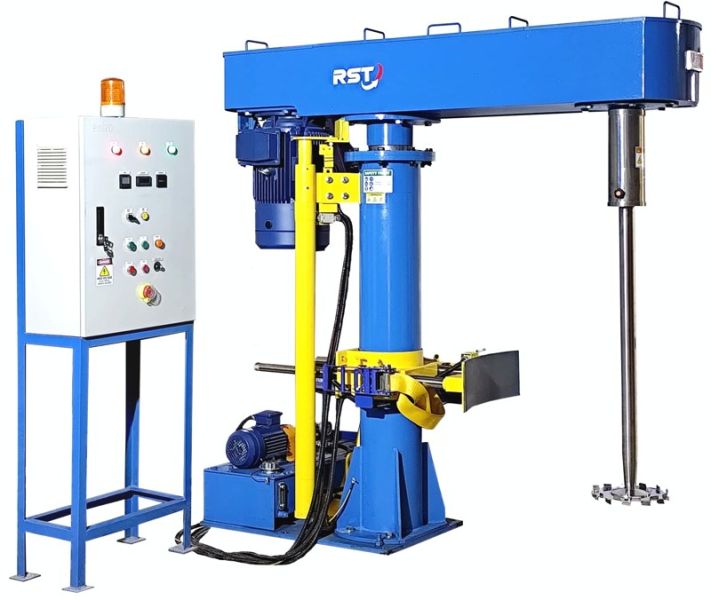
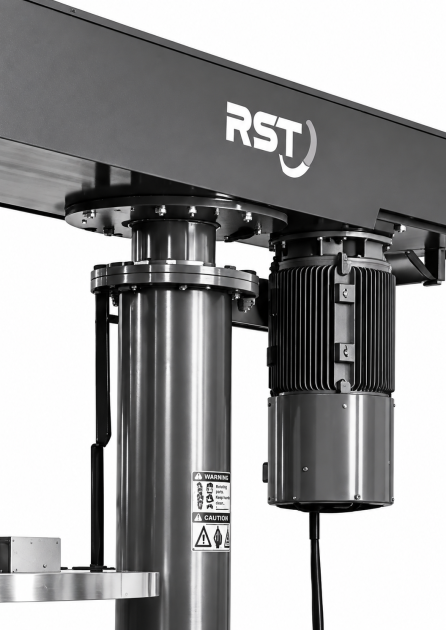
A high speed mixer is a mixing machine that operates at high rotational speeds—typically above 1,000 RPM—using a specially designed disc or blade to break down solid particles in a liquid and disperse them evenly. In industrial applications, this equipment is also commonly known as a high speed disperser or, at Rho Sigma Trijaya, as an HSD Mixer.
The operating principle is relatively simple: the high-speed rotation of a toothed disc generates turbulence and sufficient shear force to break down agglomerates of pigments, fillers, or other additives until they are uniformly dispersed and thoroughly incorporated into the liquid carrier.
When Do You Need a High Speed Mixer?
Not every mixing process requires high-speed operation. A high speed mixer is particularly suitable when your process involves one or more of the following conditions:
Dispersion of pigments or colorants into resins, paints, or inks, where solid particles need to be broken down and uniformly distributed
Mixing of low- to medium-viscosity materials, such as paints, coatings, adhesives, or liquid chemical products
Deagglomeration processes, such as dispersing fillers, carbon black, or other fine powders that tend to form agglomerates when initially introduced into a liquid
Medium- to large-scale production where faster processing is required compared with conventional mixers
If the material is extremely viscous, such as a paste or semi-solid mass, a high speed mixer may not be the most appropriate choice. In such applications, a mixer specifically designed for high-viscosity materials, such as a paste mixer, is generally more suitable.
Factors to Consider Before Choosing a High Speed Mixer
1. Material Viscosity
The higher the material viscosity, the greater the required motor torque and the lower the optimal operating speed may be. Low-viscosity materials, such as water-based paints, can generally be processed at higher RPMs than more viscous materials.
2. Batch Size
The tank capacity and disc diameter should be properly matched to the batch volume. A disc that is too small for a large batch may result in inadequate circulation and uneven dispersion throughout the tank. On the other hand, a disc that is too large for a small batch can consume excessive energy and may cause unwanted product heating.
3. Type of Particles Being Dispersed
Organic pigments, inorganic fillers, and carbon black have different dispersion characteristics and may require different levels of shear. Some materials require higher shear forces to achieve proper dispersion, while others may be negatively affected if subjected to excessively high shear or temperature.
4. Cooling System
High-speed dispersion generates heat due to friction and energy input. For temperature-sensitive materials, the mixer can be equipped with a cooling jacket to help maintain the product temperature within the desired operating range throughout the process.
5. Mixer Construction Materials
For chemical, food, pharmaceutical, and other applications where product purity is critical, product-contact components such as the blade, shaft, and tank should be manufactured from suitable materials, such as stainless steel, and comply with the applicable industry standards. The material selection should also take into account the chemical compatibility of the product being processed.
Signs That You Are Using the Wrong Mixer
Several common symptoms may indicate that the mixer specifications do not match your process requirements:
The dispersion still contains visible particles or fine agglomerates after the normal processing time
The product experiences overheating or unwanted changes in viscosity
The processing time is significantly longer than expected or compared with similar industrial processes
The motor frequently trips or experiences overload when processing certain batches
If any of these symptoms are familiar in your production process, the mixer specifications may not be properly matched to the characteristics of your material, batch size, or production requirements.
Conclusion
Choosing the right high speed mixer is not simply about achieving a high RPM. The key is to match the equipment specifications—including disc design, motor power and torque, operating speed, cooling system, tank capacity, and construction materials—to the characteristics of the material and the specific production requirements.
Rho Sigma Trijaya provides HSD Mixers specifically designed for the dispersion of pigments, paints, inks, coatings, resins, and other liquid chemical products. Mixer specifications can be customized based on your batch capacity, material characteristics, viscosity, dispersion requirements, and production process.